The Adoration of the Shepherds and the Magi
Edward Burne Jones and the Dying of the Light
2 min read
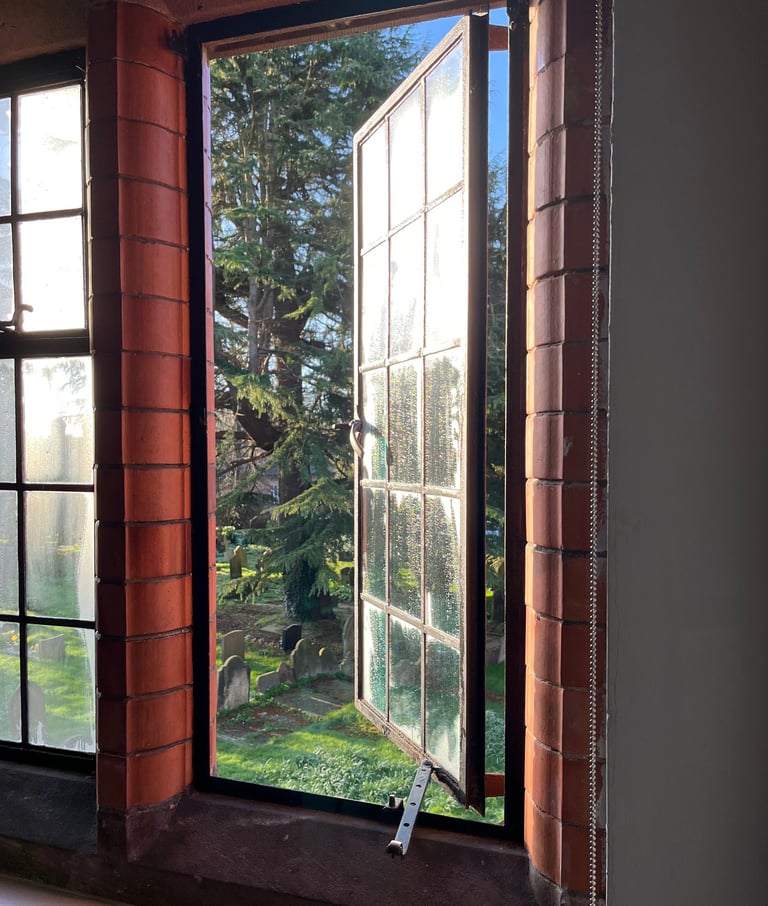
Outside of the bedroom window of my temporary digs is a substantial pine tree. It has an admirable centre of gravity and a noble character. I have nodded salutation with the Crow, Pigeon and Magpie who make home in its resinous branches. It is a befriending thing to sleep alongside for a couple of nights. It sits at the edge of a graveyard, a companion to the dead, a guardian spirit or sentinel. We are a peaceable gathering.
Earlier this morning after a leisurely breakfast of black coffee, croissant and marmalade, I visited the neighbouring church to see the last stained-glass window that Edward Burne-Jones would design before his death in 1898. There are a number of Burne-Jones window in the church of St Deiniol, Flintshire, however it is the west wall window that I have come to see, The adoration of the Shepherds and the Magi. I have been before, but this is the first time in good daylight. The sun’s extra lumens lift the window to its best and improve the experience immeasurably. Stained glass windows were conceived to let the light of God into the church. Sadly, Britain is wired on a dimmer switch. The sun moves the shapes and reflections of the window’s picture over the pews, the glass dances through the day. Glass is born in the eye of fire and is continually in its service.
As happens often with Burne-Jones/Morris & Co works, it is the colour blue that holds you. It appears vividly in differing shades across the shepherd robes, angel wings, and the sky. There is a reclining figure of the Virgin Mary cradling her baby in the centre of the window, a group of three Magi in the left-hand light and shepherds in the right-hand light. Angels kneel in the foreground and also behind. Three further angels watch from above in the main tracery lights. The blue feathered wings of the angels in the foreground are particularly arresting in the sunlight. The vivid detail and colour turn each wing to a tropical bird perched on the angels’ shoulders. While the faces of each figure hold the ‘undying mystery’ of all Burne-Jones’s faces.
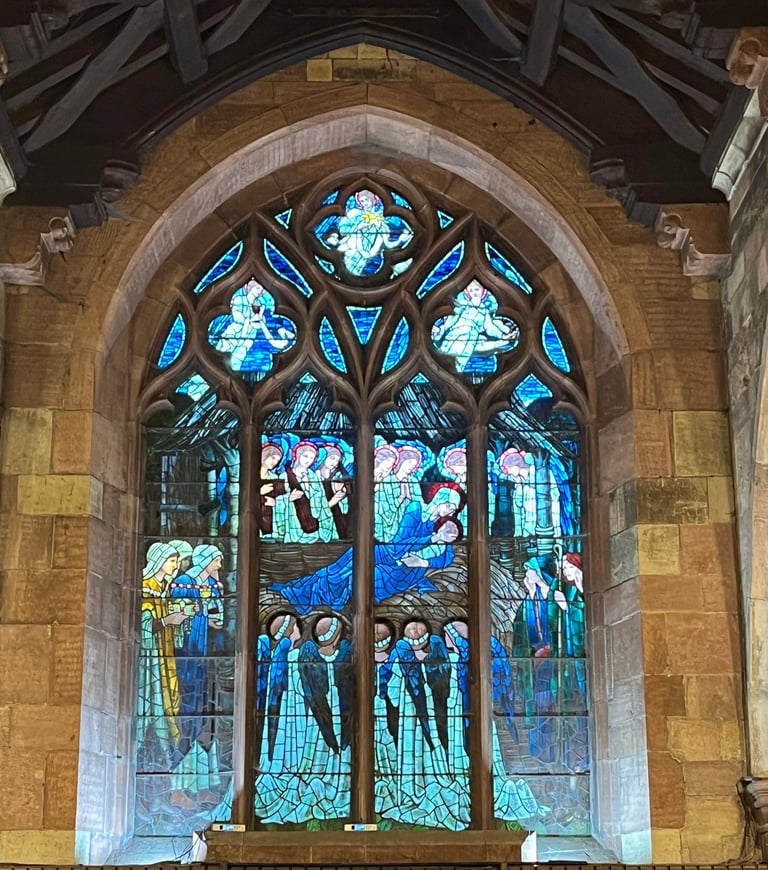
It is a masterwork, the equal of Birmingham Cathedral’s celebrated Burne-Jones window. There is something poignant in Burne-Jones’ greatest works being geographically fixed, a window in North Wales, a mosaic in Rome. They cannot be digitised; they require acts of devotion and pilgrimage to be appreciated and understood. It keeps them from popular attention. But in a world where we are able to witness much of art through a screen or on a page, these glass or tile monuments also connect us to the physicality of art, to the relationship that art has with its environment. In a time where everything is subject to the reductive process of digitisation these artworks are quiet bastions to the beauty of materiality.
This was the last window that Burne-Jones would design, perhaps a direct bargain with the angels. Two years previously his lifelong friend and collaborator William Morris had died, after which Burne-Jones said his interest in life came to an end.
Images Gavin Stoneystreet